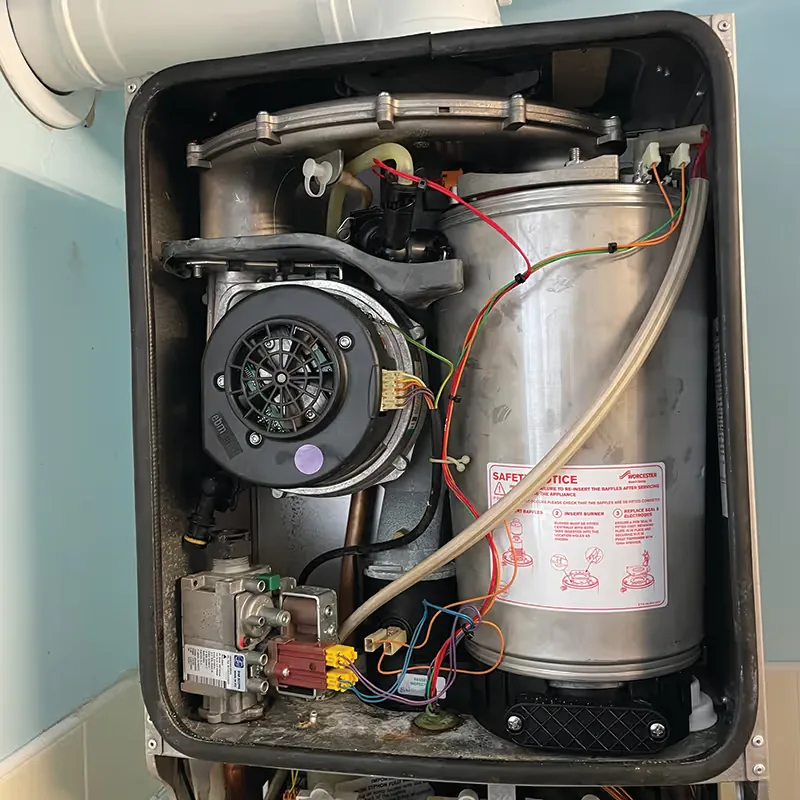
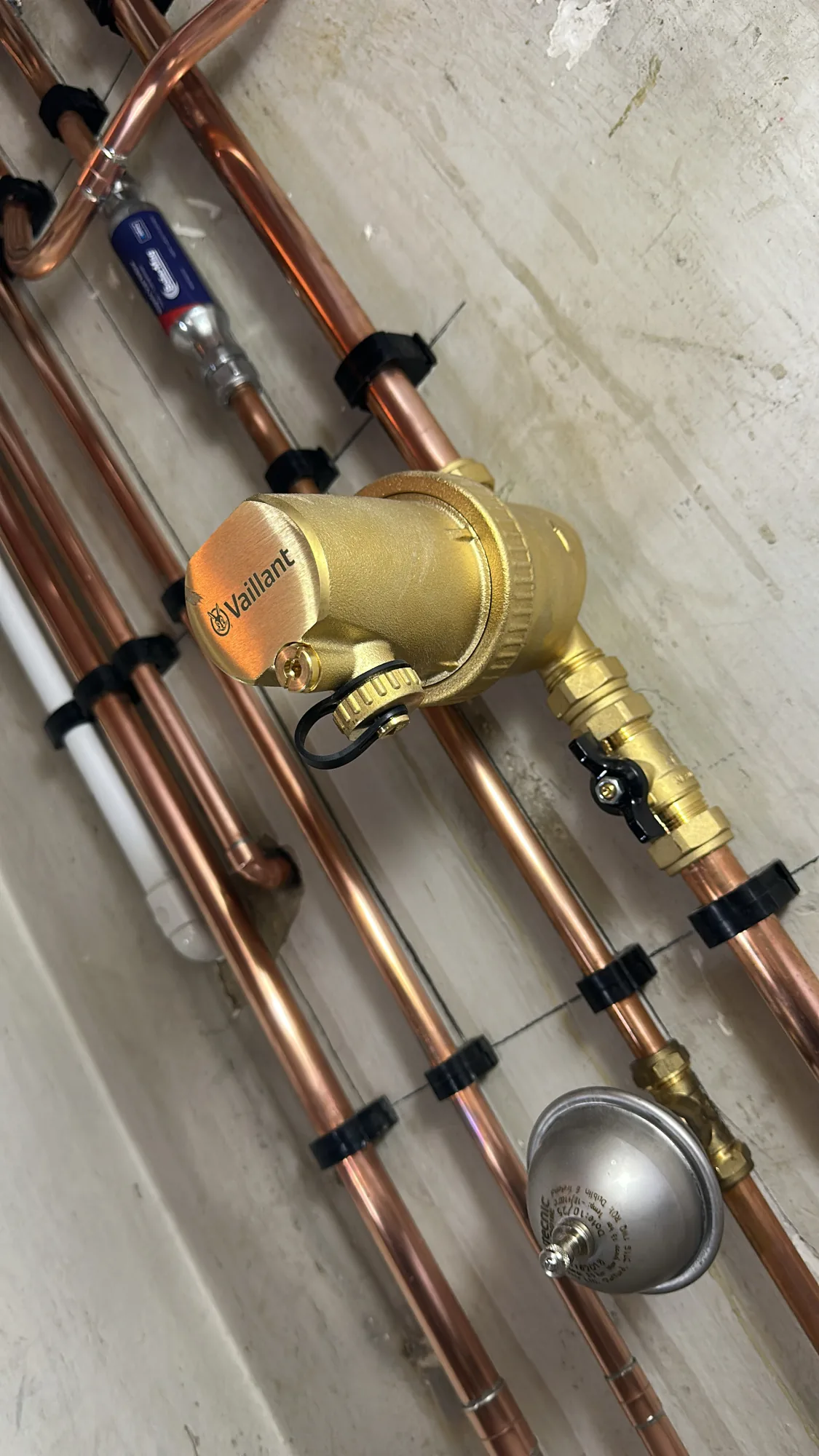
Quality pipework is the difference between a heating system that performs reliably for decades and one that develops cold spots, leaks and inefficiency. Well-planned, neatly installed pipework improves flow, reduces noise, makes future maintenance easier and protects your boiler. At Heritage, precision pipework is at the heart of everything we do.
When most people think about a new heating system, they picture the boiler on the wall. It is the part you see every day, the part with the brand name and the warranty. Yet the boiler is only one piece of the puzzle. The pipework that feeds it, the network of copper and fittings hidden behind walls and under floors, quietly decides how well your whole system performs. Get the pipework right and everything runs smoothly for decades. Get it wrong and even the best boiler in the world will struggle. This is why pipework is at the heart of how we work at Heritage.
The Part You Never See
Pipework is the circulatory system of your home. It carries hot water from your boiler out to every radiator, then brings it back again to be reheated. Most of it is hidden, routed under floorboards, through joists, and behind plasterboard, so once the job is finished you rarely give it a second thought.
That hidden nature is exactly why it is so often rushed. Nobody can see a sloppy pipe run once the floor goes back down, so corners get cut on jobs where the installer is in a hurry. The trouble is that the pipework does the hardest work in the system, day in and day out, for years. The quality of those joints, the way each pipe is sized and routed, and the care taken to remove air and debris all determine whether your heating is quiet, even and reliable, or a constant source of niggles.
What Poor Pipework Causes
When pipework is poorly planned or hurriedly installed, the symptoms show up across the whole system. Many of the heating problems we are called out to fix trace straight back to the pipes rather than the boiler itself.
- Cold spots and uneven heating: Pipes that are too narrow, too long, or badly balanced cannot deliver enough hot water to every radiator. The result is rooms that never quite warm up, or radiators that are hot at the top and cold at the bottom.
- Airlocks: Poorly routed pipework traps pockets of air that block the flow of water. This causes radiators that will not heat, gurgling sounds, and a system that needs constant bleeding.
- Noisy systems: Banging, ticking and humming are often caused by pipes that are not properly clipped, that rub against joists, or that expand and contract against tight fittings. Good pipework runs almost silently.
- Leaks: Every joint is a potential weak point. Rushed or poorly made joints are the most common cause of leaks, and a leak hidden under a floor can cause real damage before anyone notices.
- Premature boiler wear: Restricted flow and trapped debris force your boiler to work harder than it should. Over time that extra strain shortens its life and brings forward expensive repairs.
None of these problems are inevitable. They are the consequence of pipework that was treated as an afterthought rather than the foundation of the system.
Planning a New Heating System?
Call Heritage Heating Services on 0117 427 8963. We provide free quotes and honest advice on boiler installation and pipework across Keynsham, Bristol, Bath and the surrounding areas.
Call for a Free QuoteThe Heritage Approach
Precision pipework is what we are known for, and it is not by accident. With over 20 years of hands-on plumbing and heating experience behind the business, we treat the pipework as carefully as the boiler itself. Here is what that means in practice.
- Careful planning: Before a single pipe is cut, we plan the route. We work out the most efficient path for every run, considering where the radiators sit, how the water needs to flow, and how the system can be serviced easily in years to come.
- Correct sizing: Pipes are sized to suit the demands of your home, not just whatever is closest to hand. Properly sized pipework keeps the flow strong and even, so every radiator gets the heat it needs.
- Neat, tidy runs: We route pipes in clean, logical lines and clip them securely so they cannot move, rub or rattle. Neat pipework is not just about looks. It is quieter, more reliable, and far easier to work on later.
- Attention to detail: Every joint is made properly and tested. We take the time to flush the system and remove air and debris, so it starts life clean and runs the way it should from day one.
The work behind the walls is the work nobody else will ever see. We do it to the same standard whether it is on show or hidden away, because that is what separates a system that lasts from one that simply works for now.
How Good Pipework Protects Your Boiler
A boiler is only as good as the system it sits in. Quality pipework does not just make your heating better today, it actively protects your investment for the long term.
- Better efficiency: When water flows freely and evenly, your boiler reaches the right temperature quickly and does not have to overwork. That means lower running costs and a system that warms your home faster.
- Fewer faults: Clean, well-balanced pipework keeps debris and air out of the boiler, which are two of the biggest causes of breakdowns. A well-installed system simply goes wrong far less often.
- Protected warranty: As accredited Worcester Bosch and Vaillant installers, we are able to offer an industry-leading 12-year guarantee. That kind of guarantee depends on the whole installation being done correctly, pipework included. Cut corners on the pipes and you put the boiler, and its warranty, at risk.
- Longer life: A boiler that is not constantly strained by poor flow or trapped debris lasts longer. Good pipework is one of the simplest ways to get the full life out of an expensive piece of equipment.
What to Look For in an Installer
If pipework is so important, how do you make sure your installer takes it seriously? Here are the things worth checking before you commit to anyone.
- Gas Safe registration: Any engineer working on your heating must be Gas Safe registered. This is a legal requirement and your first line of protection. You can verify any engineer at gassaferegister.co.uk.
- A proper survey: A good installer visits before quoting, looks at your existing system, and plans the pipework. Be cautious of anyone who quotes without seeing the job, as it usually means the pipework has not been thought through.
- Manufacturer accreditation: Accredited installers are trained and approved by the manufacturer, which is why they can offer the longest guarantees. It is a sign the work will be done to the standard the warranty demands.
- Pride in the hidden work: Ask how they route and clip their pipework, or whether they flush the system before handover. Installers who care about pipework are happy to talk about it. Those who do not will gloss over it.
- Experience and reputation: Years of hands-on work show in the quality of a finished system. A settled, well-regarded local firm has a reputation to protect and every reason to get the details right.
Choosing carefully at this stage saves you years of avoidable problems. The cheapest quote is rarely the best value once you account for the cost of putting poor pipework right later.
Frequently Asked Questions
A boiler can only perform as well as the pipework allows. If the pipes are too narrow, badly routed, or full of air and debris, even a top-of-the-range boiler will struggle with cold spots, noise and extra strain. Quality pipework lets a good boiler do its job properly and last as long as it should.
Yes. Restricted flow and trapped debris force the boiler to work harder than it was designed to. That constant extra strain wears components out faster and brings forward repairs. Clean, correctly sized pipework keeps the boiler running easily, which is one of the simplest ways to protect it.
Cold spots are usually caused by trapped air or by pipework that cannot deliver enough hot water to that radiator. A radiator cold at the top often just needs bleeding, while one cold at the bottom may have a build-up of sludge. Poorly balanced or undersized pipework makes both problems far more likely.
Banging, ticking and humming are often down to pipework that is not properly clipped or that rubs against joists as it heats up and cools down. Trapped air and a build-up of debris can add to it. A well-installed system, with pipes routed and secured correctly, runs almost silently.
Not always. Fitting a new boiler onto tired or poorly designed pipework can leave the original problems in place, and a dirty system can even damage a brand new boiler. That is why we assess the pipework during the survey and, where needed, put it right or flush the system as part of the installation.
Where pipework is on show, look for neat, evenly clipped runs rather than pipes that sag or cross awkwardly. The bigger signs are how the system behaves. Quiet running, even heat across every radiator, and few breakdowns all point to pipework that was installed with care. Frequent airlocks, noise or cold spots suggest the opposite.